In this article
Uncomfortable shoes ruin more outfits than any fashion mistake. If your feet hurt, you change your posture, cut walks short and eventually stop wearing the shoes — and the outfit that depended on them. The good news is that comfortable shoes no longer have to look orthopaedic. Fit comes first; style follows easily.
Key takeaways
- Have both feet measured regularly; size and width change over the years.
- Shop later in the day and wear the socks or hosiery you’ll use with the shoes.
- Look for a stable heel, cushioned footbed, flexible forefoot and enough toe room.
- Rotate pairs and use shoe trees to extend their life.
Why fit changes over time
Feet change throughout adult life: arches can relax, feet may lengthen or widen, and pregnancy, weight changes and age all have an effect. Many people wear the same size they wore years ago without checking. If you haven’t been measured in a while, have both feet measured for length and width at a shoe shop — and fit to the larger foot.
How to shop for comfort
- Shop in the afternoon. Feet are naturally slightly larger later in the day.
- Bring the right socks or tights. A thick sock can change fit by half a size.
- Try both shoes and walk on a hard surface, not just carpet. Use stairs if possible.
- Check the toe box. Allow roughly a thumb’s width in front of your longest toe; toes should wiggle freely.
- Check the heel. It should hold without slipping more than slightly when you walk.
- Don’t count on “breaking in”. Leather softens a little, but a shoe that pinches in the shop will usually keep pinching.
Features that make a shoe comfortable
| Feature | What to look for |
|---|---|
| Heel height | For all-day wear, many people find 0–5 cm most comfortable; block heels are more stable than stilettos |
| Heel counter | Firm back that cups your heel and doesn’t collapse when pressed |
| Footbed | Cushioned, ideally removable so you can use your own insoles |
| Flex point | Bends at the ball of the foot, not in the middle of the arch |
| Sole | Rubber or rubber-tipped for grip and shock absorption |
| Upper | Soft leather or knit that moves with the foot; no hard seams over the toes |
| Fastening | Laces, straps or elastic that keep the foot from sliding forward |
Health note: if you have persistent foot pain, numbness, or a condition such as diabetes, speak to a doctor or podiatrist before changing footwear. This guide is general information, not medical advice.
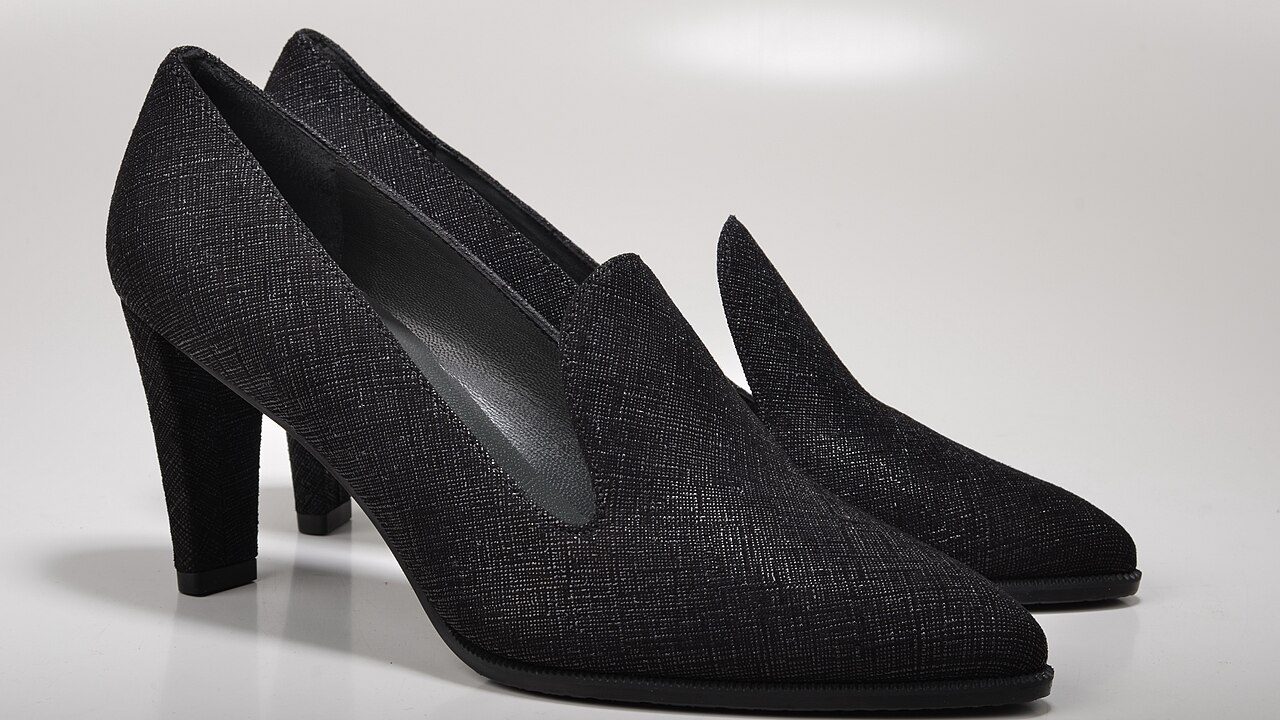
The most versatile comfortable styles
For work
- Loafers: smart, easy to slip on and suitable for trousers, skirts and dresses.
- Low block heels or kitten heels: add polish with stability.
- Brogues or Derbies: structured and supportive, excellent for long days.
- Minimal leather trainers: accepted in many smart-casual offices; keep them spotless.
- Ankle boots with a low heel: comfortable through autumn and winter.
For weekends
- Cushioned trainers for long walks and travel.
- Supportive sandals with a contoured footbed and adjustable straps.
- Chelsea boots for cold, wet days.
- Espadrilles or canvas shoes for summer — look for padded insoles.
Our workwear refresh guide explains why shoes are one of the quickest ways to update an outfit.
Materials and seasons
Leather breathes and moulds to the foot; suede is soft but needs protection from water; knitted uppers are light and flexible; and rubber or treaded soles provide grip in wet weather. Treat leather and suede with a protective spray suitable for the material before the first wear, especially before winter.
Make shoes last longer
- Rotate pairs — leather needs time to dry out between wears.
- Use cedar shoe trees to absorb moisture and keep the shape.
- Clean and condition leather regularly; brush suede gently.
- Replace heel tips and soles before damage reaches the shoe’s structure — a cobbler can often add rubber protection to leather soles.
- Store shoes away from direct heat and sunlight.
Frequently asked questions
When is the best time of day to buy shoes?
Later in the day, when feet are naturally a little larger after hours of standing and walking. Shoes that fit then will usually be comfortable all day.
How much space should there be at the toe?
There should usually be about a thumb’s width between your longest toe and the front of the shoe, and your toes should be able to wiggle freely.