In this article
The most sustainable — and cheapest — garment is the one you already own and keep wearing. How you wash, dry and store clothes has a huge effect on how long they look good. Most damage happens quietly: too much heat, too much friction and too much washing. A few changes to your routine can add years to your favourite pieces.
Key takeaways
- Wash less often, cooler and on shorter, gentler cycles whenever the label allows.
- Turn clothes inside out, close zips and use mesh bags for delicates.
- Air-drying protects fibres, elastic and colour far better than high-heat tumble drying.
- Fold knits, hang structured pieces, and store everything clean.
Step 1: Read (and trust) the care label
Care labels use internationally recognised symbols. The five main families are:
| Symbol | Means | Key details |
|---|---|---|
| Wash tub | Washing | Dots or a number show the maximum temperature; a hand means hand-wash; lines underneath mean a gentler cycle |
| Triangle | Bleaching | Crossed out means no bleach |
| Square | Drying | A circle inside means tumble-drying (dots = heat level); lines inside mean line-dry or dry flat |
| Iron | Ironing | Dots indicate maximum heat |
| Circle | Professional cleaning | Letters indicate the dry-cleaning process |
Labels show the maximum treatment a garment can take. Going gentler is almost always fine; going harsher is where damage begins. If you’re unsure what a fibre needs, our fabric guide explains each one.
Step 2: Wash less, and wash smarter
- Air before you wash. Wool, denim, outerwear and knitwear often only need airing overnight between wears.
- Spot-clean small marks instead of washing the whole garment.
- Go cooler. For everyday laundry, a cool or lukewarm wash with a modern detergent cleans most items well, reduces shrinking and fading, and saves energy.
- Sort by colour and weight. Wash darks together and keep heavy items (towels, jeans) away from delicate fabrics.
- Turn inside out to protect colour and prevent pilling on the surface.
- Close zips and hooks so they don’t snag other clothes.
- Don’t overload the machine — clothes need room to move to get clean.
- Use the right amount of detergent. Too much leaves residue that stiffens fabrics and attracts dirt.
- Mesh bags protect lingerie, tights, silk and fine knits.
Step 3: Dry without damage
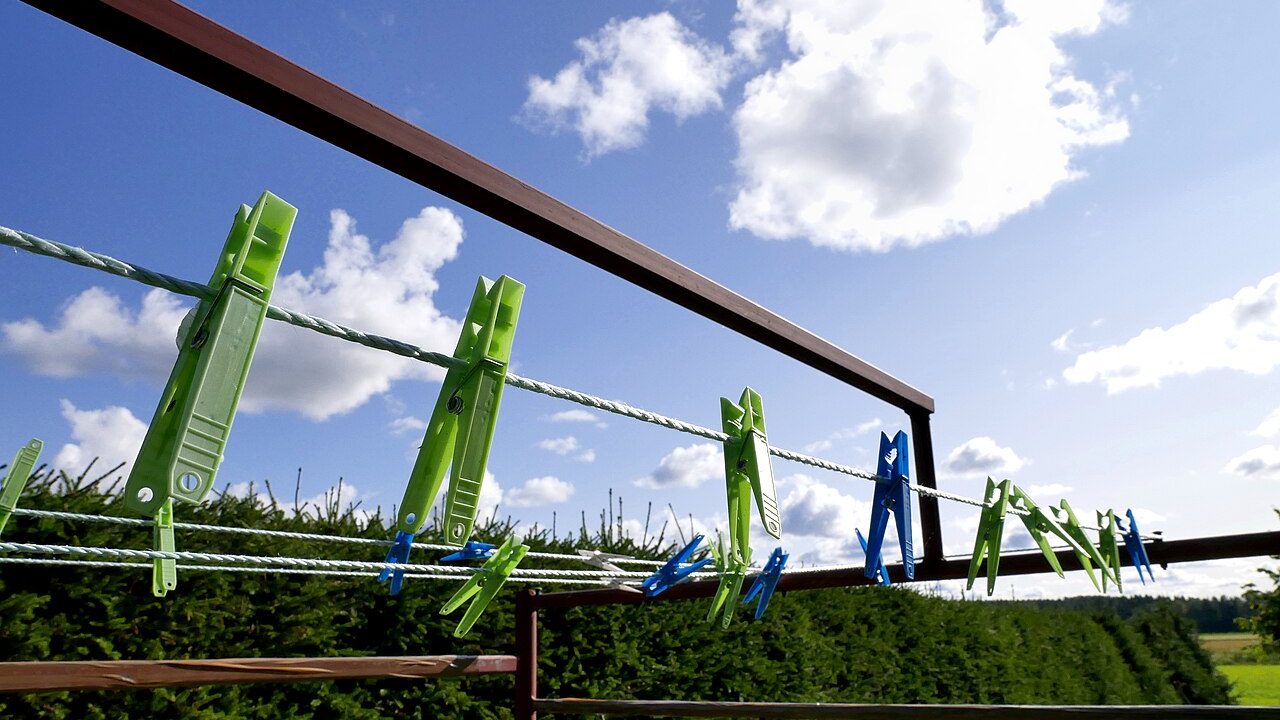
High heat is the enemy of elastane, wool and many synthetic fibres, and repeated tumbling causes pilling and shrinkage. Whenever possible:
- Line-dry or use a drying rack; dry coloured items in the shade to prevent fading.
- Dry knitwear flat on a towel, reshaping it while damp.
- Hang shirts on hangers to dry — it reduces ironing considerably.
- If you tumble-dry, use a low-heat setting and remove items while slightly damp.
- Never tumble-dry leggings and swimwear; heat breaks down the stretch fibres (see our leggings guide).
Step 4: Treat stains quickly and correctly
Act fast, blot rather than rub, and test any product on a hidden area first. General approaches for common stains:
| Stain | First step |
|---|---|
| Coffee / tea | Rinse from the back with cold water, then treat with a little liquid detergent |
| Oil / grease | Blot, then work in a drop of washing-up liquid before washing |
| Make-up | Use a little micellar water or detergent on a cotton pad, working from the outside in |
| Grass / mud | Let mud dry and brush off; pre-treat grass with an enzyme stain remover |
| Blood | Always cold water — heat sets protein stains |
| Deodorant marks | Pre-treat with detergent and avoid hot washes, which can set residue |
For silk, wool, structured tailoring or anything labelled dry-clean only, take significant stains to a professional cleaner and tell them what caused the mark.
Step 5: Ironing and steaming
A handheld steamer is gentler than an iron for most garments and refreshes wool and knitwear. When ironing, follow the label’s heat setting, iron darks and delicates inside out, and use a pressing cloth on wool and on anything that can become shiny.
Step 6: Store clothes so they keep their shape
- Fold knitwear; hanging stretches shoulders and lengthens garments.
- Hang structured pieces — blazers, coats, shirts, dresses — on shaped, non-slip hangers. Thin wire hangers distort shoulders.
- Give clothes space; overcrowded rails crush fabrics and cause creases.
- Store clean. Body oils and food traces attract moths and set into stains.
- Protect wool and cashmere from moths with clean storage, regular airing and cedar or lavender.
- Use breathable bags (cotton, not plastic) for seasonal storage and special-occasion wear.
- Keep shoes on trees and bags stuffed with tissue paper (see our handbag guide).
Step 7: Mend early
A loose button, a small seam split or a dropped hem takes minutes to fix if you catch it early — and becomes a bigger job if you don’t. Keep a basic kit (needles, neutral threads, spare buttons, safety pins) and learn two stitches: a running stitch and a slip stitch. For anything more complex, a local tailor is worth finding. Our Tailoring 101 guide explains common alterations and repairs.
Frequently asked questions
How often should I wash jeans?
Far less often than most people do. Unless they are visibly dirty or smell, airing jeans between wears and washing them inside out in cold water every several wears helps them keep their colour and shape.
Should knitwear be hung or folded?
Folded. Hanging stretches the shoulders and lengthens the garment over time. Store knits folded on a shelf or in a drawer.